
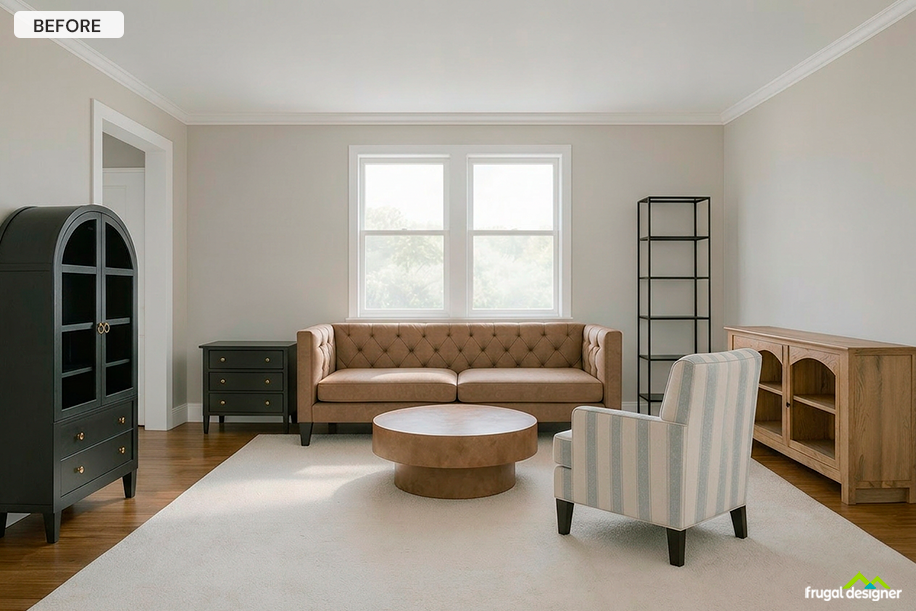
Designers think about line in terms of direction. Horizontal lines tend to feel calm and grounded, vertical lines add height and structure, and curved lines soften a space.
What this means for you is how your eye moves through the room. When lines are repeated, your eye naturally follows them, which makes the space feel more organized and intentional.
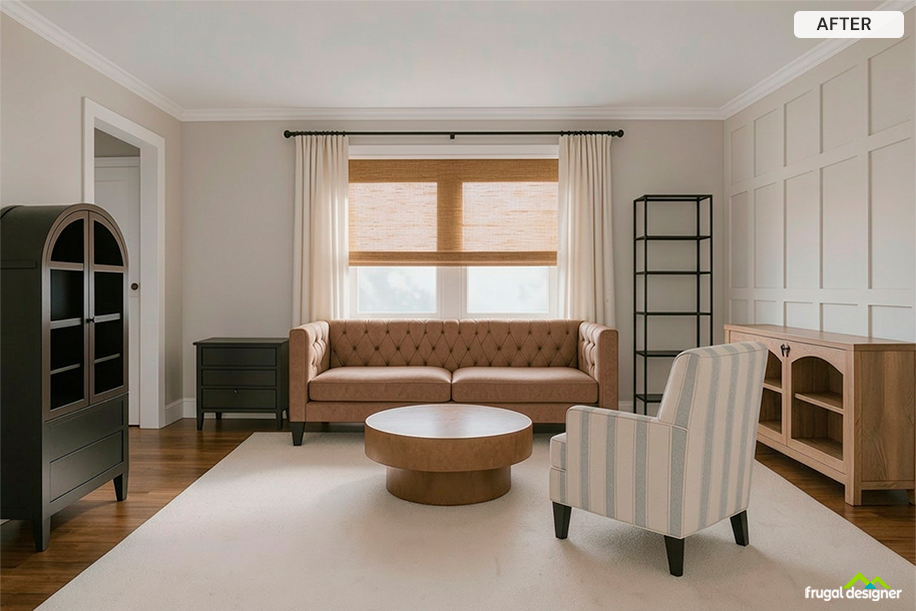
We added board and batten to one wall to introduce strong vertical and horizontal lines in the room. From there, we built on those lines with curtains (vertical) and a window shade (horizotal).
Looking at the space, those lines repeat across the wall, window, and bookcase, so your eye moves through the room instead of stopping in one place.
We added height around the window with curtains and a shade to balance the taller shelving on the other side of the room. That way, one side doesn’t feel heavier than the other.
Looking at the space, the height and structure feel more evenly distributed from side to side.