
Texture is what makes a room feel warm and comfortable. It’s the difference between a space that looks good and one that actually feels inviting.
We’ve already introduced some texture through the woven shades, the wall paneling, and the area rug. Now we’re building on that by layering in softer materials to add depth and make the space feel more complete.
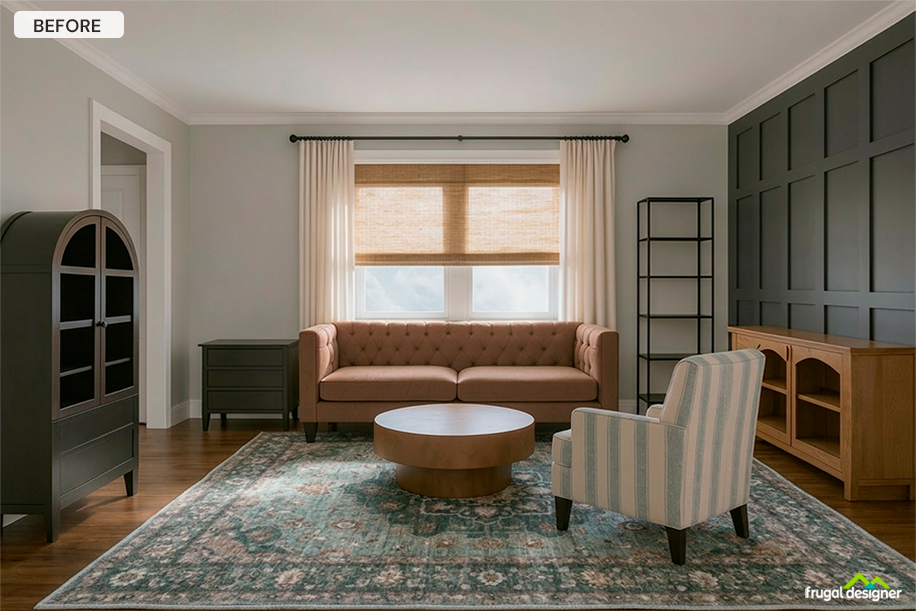
Designers think about texture as a mix of materials — soft, smooth, rough, and natural.
What this means for you is layering different materials so the room feels more comfortable and lived in, instead of everything feeling the same.
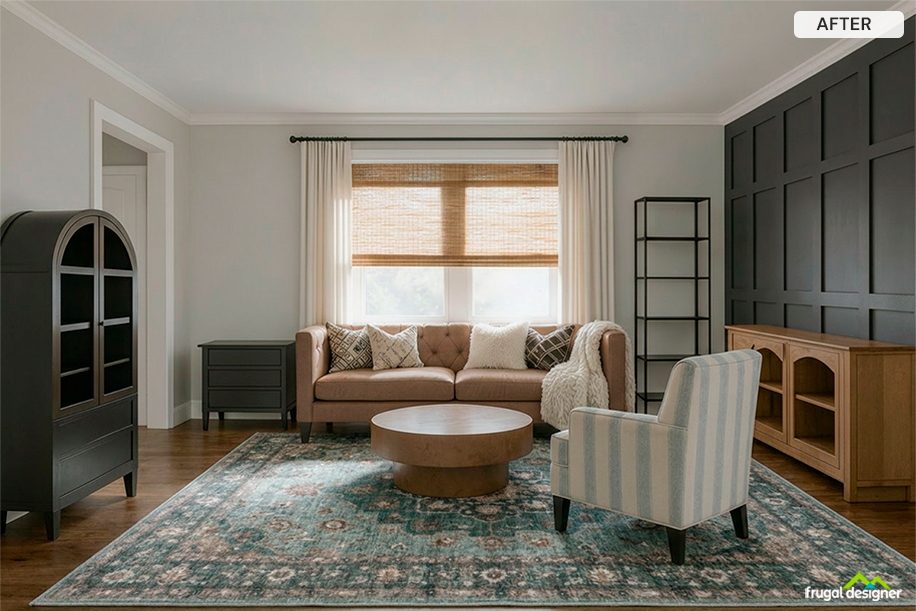
We already had texture in the room from the woven shades, the wall paneling, and the area rug. Here, we added a few specific pieces: a chunky knit throw on the sofa, a pair of linen pillows, and a leather accent pillow.
Looking at the space, you can see the difference between the soft fabrics and the harder surfaces. That mix is what adds depth and keeps the room from feeling flat.
We used a mix of textures across the room — harder surfaces like the metal bookcase and wood pieces, along with softer upholstery, curtains, and woven shades.
Looking at the space, no one material stands out too much. The mix of soft and hard finishes is spread out, which keeps the room from feeling too heavy or too plain in any one area.