
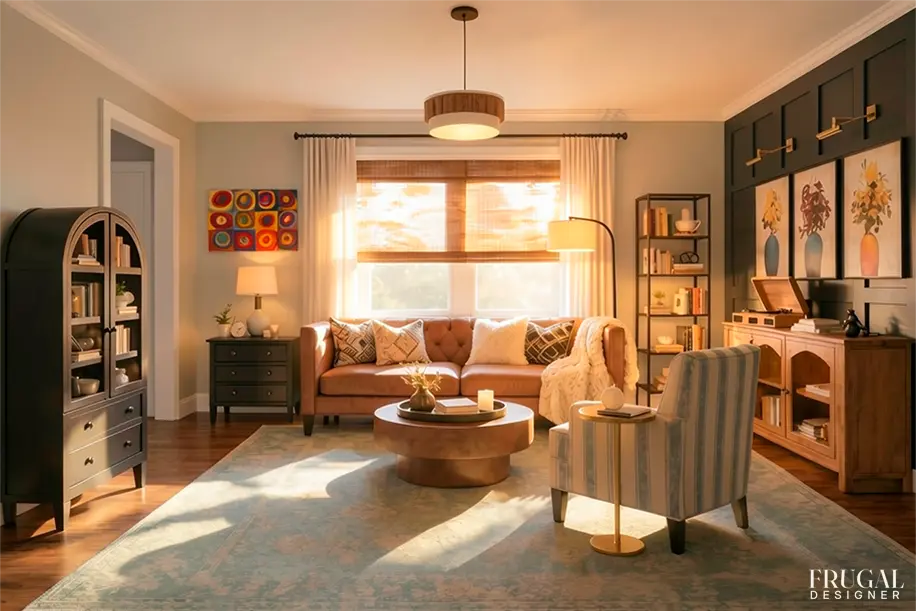
Good design doesn’t happen all at once. Most rooms come together step by step, with each layer adding something different.
Using one room as an example, we’ll walk through the core elements of design and show how each one changes the space.
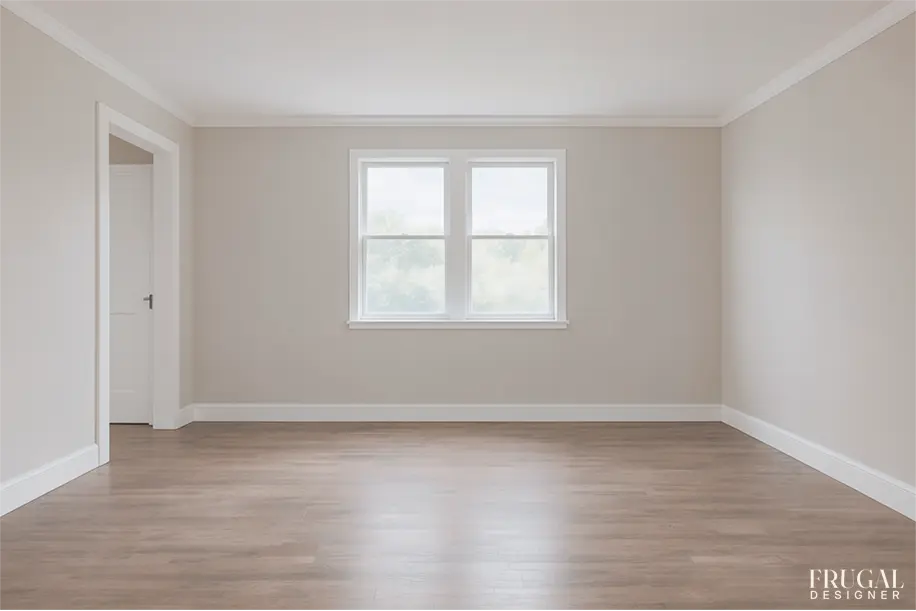


Rather than focusing only on the finished room, we break the design process into six essential principles: Space, Line, Color, Texture, Pattern, and Light. Each section explains why those choices matter, how they contribute to the overall design, and how you can apply the same ideas in your own home.
In interior design, space isn’t just about square footage. It’s about how furniture is arranged, how much room is left open, and how everything fits together.
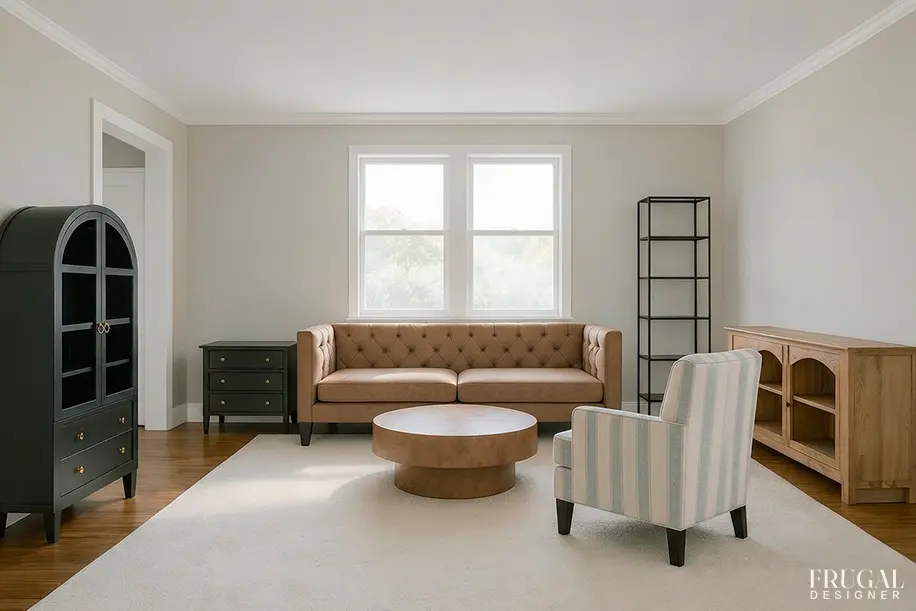
Designers often think about space in two ways: positive space and negative space. Positive space is where furniture and decor sit, while negative space is the open areas that give a room breathing room.
What this means for you is keeping the layout functional and balanced. Furniture should be arranged so it doesn’t block how you move through the room, and the overall setup should feel even so nothing feels too heavy or crowded.
Designers think about line in terms of direction. Horizontal lines tend to feel calm and grounded, vertical lines add height and structure, and curved lines soften a space.
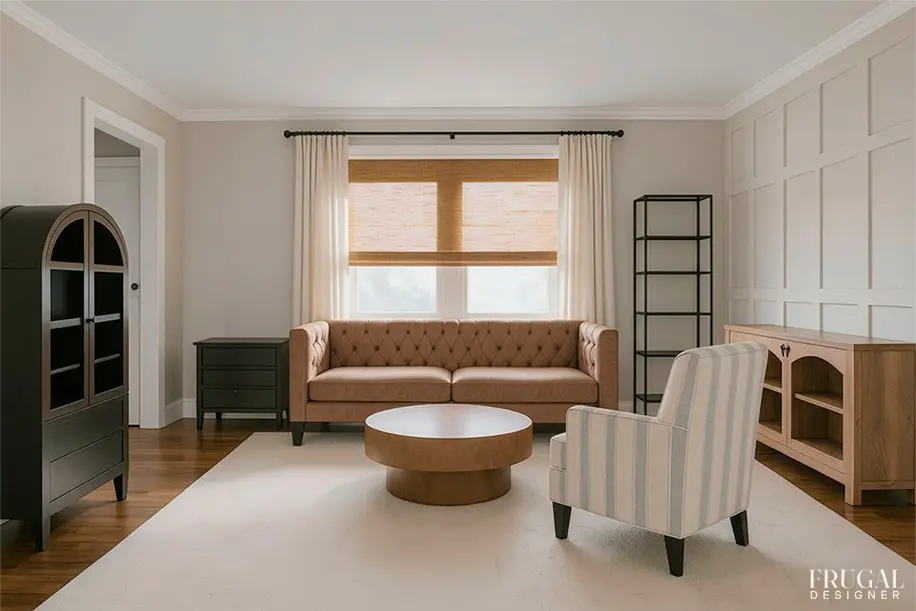
We added board and batten to one wall to introduce strong vertical and horizontal lines in the room. From there, we built on those lines with curtains (vertical) and a window shade (horizontal).
Looking at the space, those lines repeat across the wall, window, and bookcase, so your eye moves through the room instead of stopping in one place.
Color is what gives a room personality. It can make a space feel calm, warm, bright, or dramatic. Once the layout and structure are in place, color is what starts to bring the room to life.
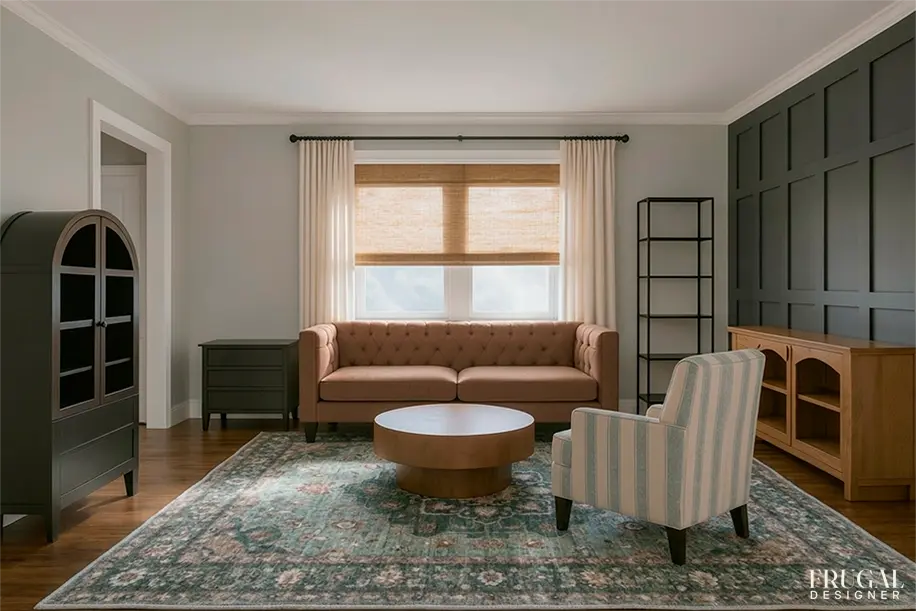
We added a darker wall behind the low cabinet to create contrast with the rest of the room. That shift from light to dark gives the space more depth. The tall dark charcoal cabinet on the opposite site of the room creates balance.
Looking at the room, your eye is naturally drawn to that wall first, which helps anchor the space.
Texture is what makes a room feel warm and comfortable. It’s the difference between a space that looks good and one that actually feels inviting.
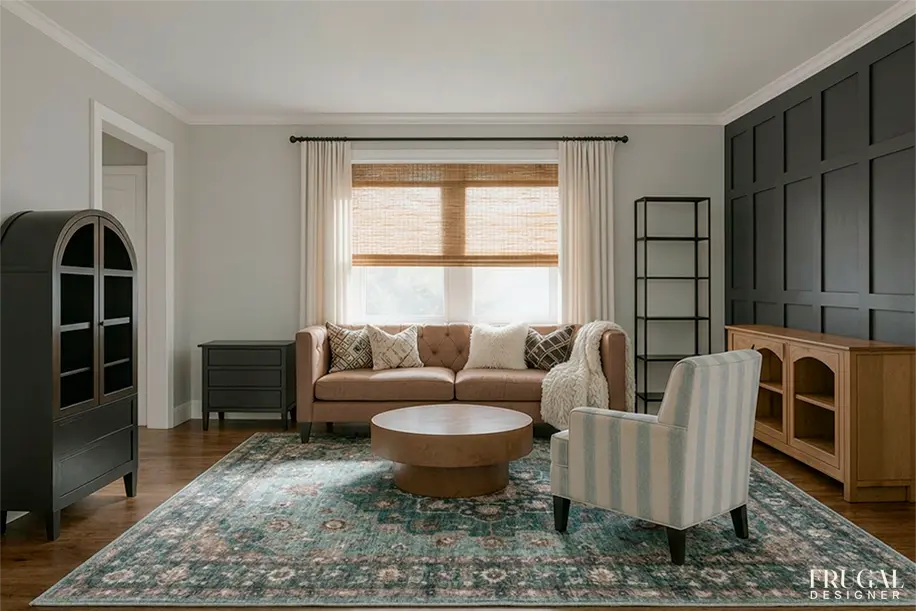
We already had texture in the room from the woven shades, the wall paneling, and the area rug. Here, we added a few specific pieces: a chunky knit throw on the sofa, a pair of linen pillows, and a leather accent pillow. Looking at the space, you can see the difference between the soft fabrics and the harder surfaces. That mix is what adds depth and keeps the room from feeling flat.
We used a mix of textures across the room — harder surfaces like the metal bookcase and wood pieces, along with softer upholstery, curtains, and woven shades. Looking at the space, no one material stands out too much. The mix of soft and hard finishes is spread out, which keeps the room from feeling too heavy or too plain in any one area.
Designers think about pattern as repetition — shapes, lines, or designs that show up more than once in a space. What this means for you is adding a few patterns and repeating them so the room feels more interesting, without making it feel busy.
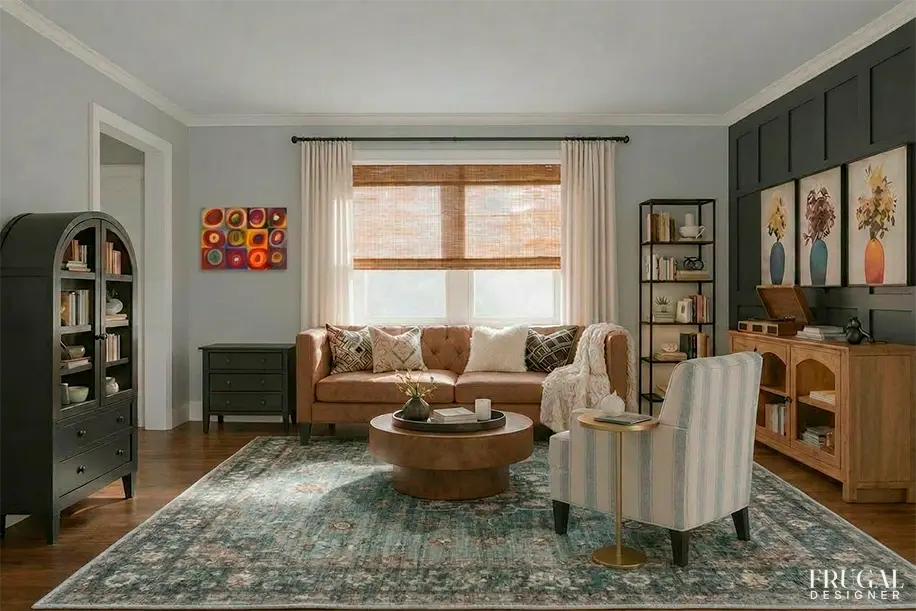
We added an abstract art piece that stands out from the rest of the patterns in the room. It contrasts with the more structured vase prints, but in a way that still works together.
The abstract piece also pulls slightly away from the main color palette, which adds interest and keeps the room from feeling too matched or formulaic.
Looking at the space, your eye is drawn to that piece first, which adds energy without overwhelming the room.
Designers think about lighting in layers — ambient, task, and accent lighting.
What this means for you is not relying on just one overhead light. Instead, using multiple light sources helps create a more comfortable and functional space.
Instead of relying on a single overhead light, we added multiple light sources throughout the room. The ceiling fixture provides general light, while the table lamp, floor lamp, and wall lights each add their own glow.
Looking at the space, you can see how different areas are lit in different ways — the sofa, the artwork, and the corners of the room all have their own light.
A well-designed room isn't the result of one perfect purchase—it's the result of many thoughtful decisions working together.
Once you understand how the six design principles interact, decorating becomes far less overwhelming. Instead of wondering what to buy next, you'll understand why each piece belongs and how it contributes to the finished space.
Whether you're refreshing a single corner or designing an entire room from scratch, these principles provide a framework you can return to again and again. They help you create spaces that feel balanced, comfortable, and uniquely yours—without spending more than you need to.
Great design isn't about a bigger budget. It's about making better design decisions.
Frugal Designer participates in affiliate marketing programs and may earn commissions from qualifying purchases made through affiliate links.
As an Amazon Associate, we may earn commissions from qualifying purchases from Amazon.com.